Saturday, September 10, 2016

Ten Things the Average Joe Needs from Martial Arts


The average male in America is stressed – super stressed. The pace of acceleration in all aspects of his life creates enormous pressure. Deadlines, long hours, time ticking away, the honey-do-list, the office politics, the family needs, financial security, home ownership, not to mention being pegged the Fixer. Dad can fix anything! Because all men are endowed with natural handyman skills and knowledge, right? He's suppose to change a tire in four minutes flat, be a mechanical genius and fix anything and everything that breaks down, and possess the innate ability to negotiate the best deal out of any salesman. He’s suppose to be the family superhero.

What else can we add to this smorgasbord of stress? Many men strive to become good providers, a source of stability and strength for his family and friends. There is always the expectation of being a good protector as well as a good provider.

If you got the Provider portion of your life on track, we can help you with the Protector side of things. We can help you with the stress too.


1. Stress Release


Wing Chun Do can battle stress on several fronts. One way is through mindfulness, which is more about concentration than it is about spirituality. Wing Chun Do focuses your attention on the present. Focused on movement and attaining technique, you are able to quiet your mind and eliminate all distractions.

The concentration benefits of mindfulness while you are training are not just physical; they are behavioral. Studies have shown that deep concentration can effect, at a basic neural level, in how we feel and think. Not only does mindfulness improve emotion regulation, the ability to concentrate deeply improves connectivity and communication within our brain’s attention networks. You stay focused for longer periods when you are in and out of the kwoon.


2. Physical Activity


Study after study reports that the best thing you can do for your mind and body is to get regular exercise, the second front on our battle over stress.  Strengthen muscles, lose a few pounds, boost overall mood, develop fast twitch muscles becoming faster, exercise while learning, have some fun. Eventually, we will all have to admit that the true Fountain of Youth is Exercise. Learning while being physical offers physical training for your brain, brain plasticity. Get training on your Protector Skills.


3. True Self-Defense


This will take a load off your mind. Having confidence in technique, but more importantly is the distinction of having SELF-confidence in your ability to successfully deliver and apply that technique effectively, spontaneously and right on target. Bruce Lee stated, "I don't hit. It hits all by itself." From Save Your Ass Techniques to the No Doubt About It Can of Whoop Ass, the average Joe can deliver if or when the need arises. Long live the Protector!


4. Broseph


Sometimes you just want to hang out with the dudes on the playground. Wing Chun Do is all about brosephs. Egos don’t even bother to apply. Wing Chun Do is partner oriented. You need a good secondary to help you grow into the beast you want to be. So if you’re selfish and not about helping the other guy, then go find someplace else to play. We’re trying to eliminate bad stress, bad karma, and most definitely bad training partners.


5. Bruce Lee! Hell Yea.


Wing Chun Do is a direct lineage to Bruce Lee. That’s pretty cool making you a third generation BL. But no if, and or buts, the man, the founder of Wing Chun Do, Sijo James DeMile is an analytical genius. This is a Golden Opportunity, with detail and science beyond your wildest dreams, with ESP (Efficiency, Simplicity, and Practicality) never seen before. Other arts purport their goal of ESP, we’ve achieved it. So become part of the legacy. Bruce Lee – James DeMile- Rocco Ambrose – You. Between Jun Fan and Jeet Kune Do, there is Wing Chun Do. Not a stepping-stone, as some perceive, but a cornerstone.


6. Grandmaster in the House!


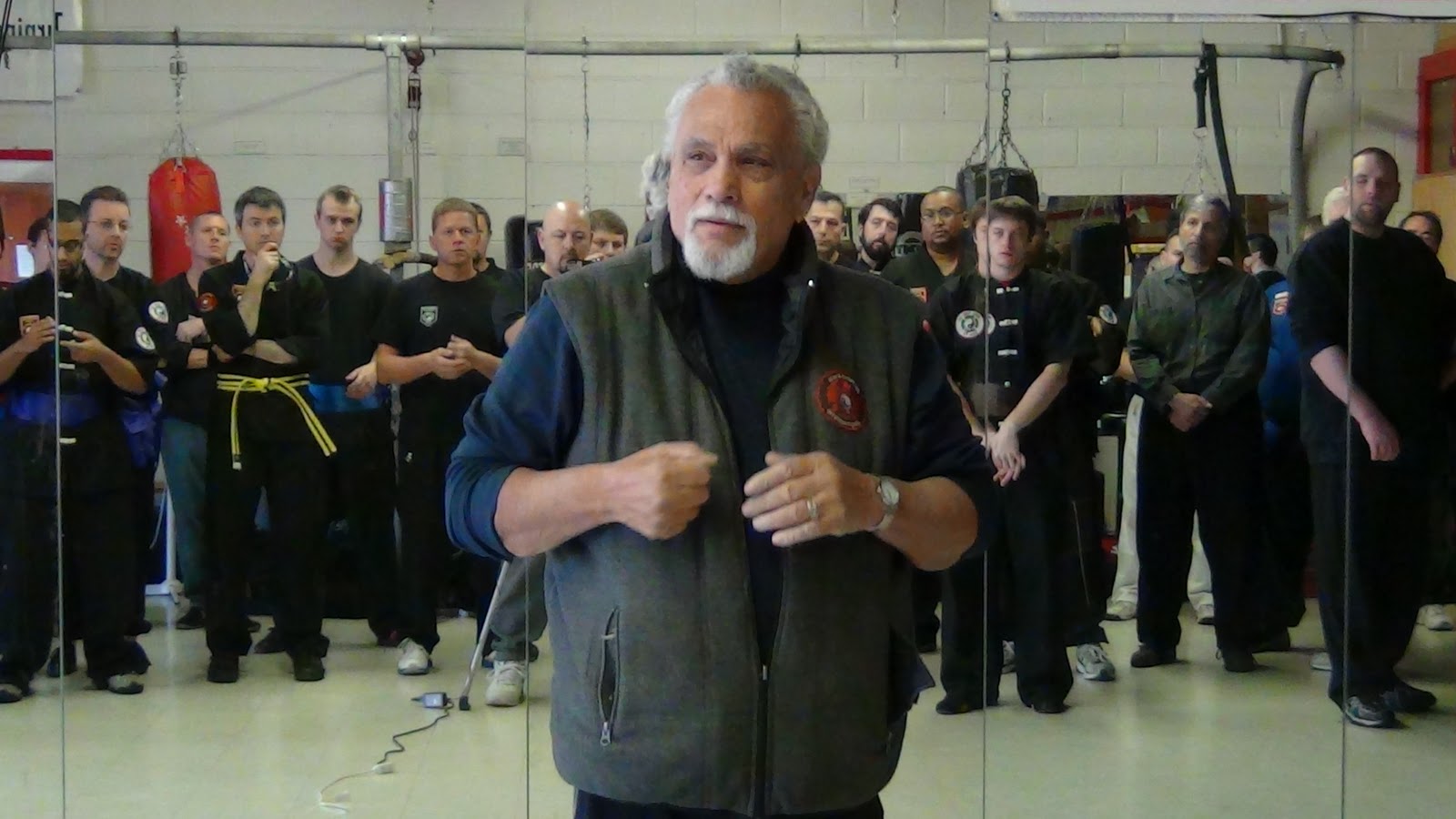
Near Michigan? Then get direct access and learn from the inheritor and Grandmaster (Si Tai) of Wing Chun Do, Rocco Ambrose. Over 30 years in WCD, Rocco Ambrose became inheritor in 2013 and made Grandmaster of Wing Chun Do when Sijo James DeMile retired in 2016. Highly detailed explanations, no holding back (okay maybe a few secrets), but recognized as one of the best instructors you will ever come across. He’ll help you find and develop your own tool pouch of techniques. He'll help you become the person you have always wanted to be.


7. Science, Conceptual - a Thinking Man’s Game  


Our school is full of engineers, philosophers, musicians, IT Techs, doctors, architects, high low drivers, stay at home dads, security guards, former gang members, bartenders, lawyers, former bikers, Marines, sales reps, retail, truck drivers, film editors, writers, moms,  tattoo artists, college and high school students, scientists, foremen, D&D players, veterans, electricians, doctors, executives, laborers, teachers, you know, the Average Joe. Each one is attracted to the science, the bio-mechanics, and the concepts that make Wing Chun Do work for everyone, regardless of size, age, gender or physical condition. Oh yeah, forgot to mention, some perceptive martial artists in the house too. They are all looking for self-defense that works for them and self-defense they can make work. Wing Chun Do can work for you too.


8. Chinese Connection – Ip Man.


Come on admit it. You went to see the movie Ip Man and you’ve been hooked ever since. What perimeter control! What defense! He didn’t even start any offensive techniques until half way through the movie when that little kid on the tricycle cruised through and gave Dad the thumbs up to open that can of whoop ass. You know you want to hear your woman say, “Get him.” (That’s what she said.)


9. A Good Place TO BE – Your Club.


Welcoming, nurturing, and always striving for your success. This is a teaching institution. We are here to educate you, not reduce you to octagon fodder. We treat you like an adult, with time constraints, with responsibilities, and with priorities. Family, School and Work are your first priorities. So if you have to come in late, no problems. If traffic was a bear, don’t turn around keep driving. No bowing except when you come in the front door, but if you want to, or it is so ingrained that you can’t help yourself, bow away. Si-tai won’t mind - too much - at first.


10. Personal Growth – Our Main Reason for Existence.


Bruce Lee’s research, writings and observations are getting more attention. He was on a path of personal growth and transitioning to philosopher in his own right. His writings point to his pursuit of mindfulness, balance, oneness that would make him not only a better martial artist, but also a better human being. Wing Chun Do has been applying those concepts as part of our curriculum for the past thirty years. Sijo DeMile, a clinical psychologist, has been endorsing and promoting these same concepts of personal growth since the inception of Wing Chun Do and founded the 501(c)3 corporation – Tao of Wing Chun Do, non-profit teaching organization. 

When you alleviate the primordial fear of the predator(s), you change profoundly. The only foe holding you back and left to conquer is you. You can now turn and face new challenges or renew passions too long left dormant. It’s up to you.   


Sunday, January 24, 2016

What Legislators Need to Know - The Benefits of Martial Arts as a Public Good


By Elizabeth Ambrose

As state legislators look for new avenue of tax revenues, they start to look at the service industry as new fertile ground to levy taxes. However, in the state of Washington, one service industry, the martial art schools have been re-categorized as a retail industry, and may be plowed under when the legislators start to furrow and plant their new tax seeds.

Certain industries considered close cousins of the martial art schools are yoga studios, chi gung, Zen or meditation studios are still considered service industries and exempt from tax.

Let’s examine the martial art school and what they offer the public. Martial art schools don’t seem to fit in the retail store category, such as a superstore, electronic store or clothing store especially in the eyes of the people they serve. They may sell equipment but usually because their students cannot find martial arts related products locally and only on line. Martial arts studio offers the uniforms and safety equipment their students need and thats pretty much where the retail portion of the business ends.

So what are the services and more importantly what role does martial arts schools play in the everyday lives of the people and communities they serve, specifically if these martial art schools are servicing and filling a need for a large and vulnerable portion of our population and that demographic is children.  I suggest these are the true services that martial arts offer parents and the children of our communities.

·         Martial arts are akin to an Intramural Activity or Sport Program
·         Martial Arts is a Physical Health and Well-Being Program
·         Martial Arts offer Mental Health and Mental Well-Being Benefits
·         Martial Arts Offers Parental Support and Long Term Collaboration
·         Martial Arts is a Public Service which Benefits the Social and Public Good
·         Martial Arts is a Public Safety Program
·         Martial Arts is a needed Small Business – Making it Too Small to Let Fail


1. PHYSICAL BENEFITS on PAR WITH INTRAMURAL ACTIVITIES

Many martial arts schools focus on teaching children and usually they represent the bulk of their revenue via tuition.

Seemingly, a purely physical endeavor, martial arts offers all the benefits of a fine physical exercise program. The martial arts program is on par with any physical gym class, or intramural sports program out there whether that be all the ball sports you can name, wrestling, lacrosse, swimming, or badminton that are offered by school districts or city programs.. However, martial arts are now considered outside of that realm. Not all children are the same and some children do not thrive in the competitive team environment  and need something more individualize. Parents seek out a martial art program because they expect the same kind of result and benefits they get when they enroll their child in any sports program. Martial Arts is high quality sport and exercise program, it just has not been recognized or made intramural - yet.

Consider that cities throughout the United States have their own community centers that offer martial arts as part of their community programs. Many Martial art schools offer an excellent afterschool program and offer the service of picking children up directly from their schools. Martial arts afterschool programs are an excellent alternative to afterschool or latchkey programs. They have more to offer their students. Police departments around the country endorse afterschool programs, because crime rates decrease during “latchkey” hours when children have a safe and nurturing place to be after school.

We get the same results such as increased focus, attention to detail, body control and coordination, increased fitness as other sports. With schools paring down their gym program, parents need to find a replacement program that increases their child’s activity level outside of the school system. More physical exercise than school can provide is needed to help fight children obesity, just getting them off the couch, increasing coordination, flexibility, strength, and with help in developing precise fine motor skills. The CDC (Center of Disease Control and Prevention) recommends:

 “Children and adolescents should do 60 minutes (1 hour) or more of physical activity each day.”

Martial arts have successfully built a system that helps replace or enhance what local middle and elementary schools lack during a school week, increased physical activity. Martial art schools are convenient for parents, less travel and expense involved and usually right in their neighborhoods. A good martial arts program is an excellent supplement to any gym class for elementary/middle school aged children or a replacement for the typical intramural sport.

Please consider labeling children martial arts classes as part of the network called intramural sport.


2. HEALTH AND PHYSCIAL WELL-BEING – CHILDREN vs. ADULTS
What legislatures fail to see is that not only Yoga, Chi Gung, Meditation, and other arts recognized by the medical profession as industries enhance the health and well-being of patients, that these types of mind and spirit connections are more likely to be directed and practiced predominantly by adults. Because the medical profession has started to look upon these types of activities helpful to health and well-being, these categories of studios get a pass when it comes to imposing a sales tax. 

Yoga, Chi Gung, Mediatation are activities that require greater concentration, long quiet spans of time, and internal learning that are hard for children to master. So where do children go to learn and foster well-being regimes? Martial arts foster well-being and the body mind connection through breathing exercises, kata or forms memorizations, precise movement, training both side of the body equally, and visualization.  

As stated on the Children Health website, "More than 6 million children in the United States participate in martial arts. Martial arts are known to improve social skills, discipline, and respect in children. Children can also improve their abilities to concentrate and focus on activities, as well as bettering their motor skills and self confidence. Martial arts can be fun and beneficial at any age."

Legislators may not realize how many pediatricians recommend martial arts to parents with children that have diminished motor skills. Martial arts is recognized as an alternative to physical therapy for children with mild physical conditions such as toe-walkers, those developing one sidedness, or slight motor skills disorders. If a client does not have adequate insurance then some parents seek a physical exercise for their child that is less competitive and individualized. 

As stated by e medicine health website: "Athletic pursuits that are less competitive (swimming, walking, yoga, chair exercise noncompetitive martial arts) tend to be more tolerable to individuals with this disorder and therefore may be more likely to result in lifelong pursuits.:

Here is what one pediatrician has to say about the martial arts:

“What drew me is that martial arts are explicitly oriented toward individual progression and achievement,” says Dr. Gill, who is president and CEO of Inpatient Specialists Medical Group Inc., in Brea, Calif., a private group of eight pediatric hospitalists.

Another dimension of martial arts that has kept his interest: the strong sense of community and respect, regardless of age or rank, that he has found at individual studios. “That appeals to me as a pediatrician,” Dr. Gill explains, “because I think children are often ignored in adult social exchanges.”


3. MENTAL HEALTH AND MENTAL WELL-BEING and THE BENEFITS TO SOCIETY

Pediatricians have also recommended the martial arts to parents in need of help with children with attention issues, anxiety, in need of discipline, self-confidence or low self-esteem. These children may not do well in a team setting. They need more individualized attention and a path for personal growth. Good martial art school and instructor collaborate with parents and help their children achieve these goals through self-defense and character or life skills training. A number of studies show growing evidence of the effectiveness of martial arts to produce affective, cognitive and behavior benefits. Children develop a more positive response to physical challenges, emotional stability, and assertiveness. It can reduce anxiety and depression and offer stress release. Ironically, according to several studies, that training in martial arts is effective in reducing aggression. Read the whole article by Julius Cezar Macarie and Ron Roberts found on the website Contemporary Psychotherapy.

Evidence that martial arts helps reduce aggressive behavior has major implications to society as a whole. Communities and schools can benefit from this martial art tenet of self-control, self-discipline, creating a proactive child.

Consider putting Martial arts into the wellness and health category.


4. PARENTS NEED A VILLAGE – UNIQUE ADVANTAGE OF THE MARTIAL ART SCHOOL (Excerpts taken from the book “The Secure Child” by E. Ambrose)

“The common thread behind the answers to the question, why did you bring your child to martial arts is that parents needed help not only for their children but also for the family as a whole. They needed help maintaining the discipline and safety construct they had built or tried to build for their children. There is so much going on outside of their home ready to dismantle or entice their children in negative directions. For some, with their family’s busy schedule, it was hard to establish any type of routine or family code of conduct with any consistency. Some parents were just beginning their construct and had no idea how to proceed.  We help supply consistency, routine, discipline and reinforce the importance of the family code and the child’s part in helping create family unity and harmony.

In the Martial art profession, instructors are in a unique position of teaching and training the same children over a span of years, some for three to six years and some  even longer, staying with children during their most formative years, ages four to fourteen, and even to eighteen years old. The martial art school and it’s instructors become another constant in these children’s lives.  We become long-term partners with their parents helping in the positive development of their children bringing about positive changes in behavior, confidence, and awareness. Here was an opportunity to make a real difference in children’s lives by delivering on aspects inherent within the martial arts of discipline, focus, and honor.  Our school concentrates our efforts on the other tenants found in martial arts just as important to the development of children’s personal growth such as self-confidence, self-esteem, doing and being their personal best. The personal development of children was the real goal and martial arts became the means to make it happen. 

When asked what they wanted their child to get out of our program, the answers were many and varied. Some parents just wanted their child to have some fun and learn martial arts and others had reasons that are more pressing.  Help with the shyness, curb the boundless energy, or with self esteem. Need for more discipline or the lack of discipline. Help with low confidence, help a lonely child, or a defiant child, an overly exuberant child. Help acknowledge a super boy or super girl, a slow child, an attention deficient child, a wild child, a risk averter, a perfectionist, an introvert, a physically challenged child and the labels continue.  Some children needed a good male role model or another positive female role model depending on their situation at home, a parent away in the military or travels extensively for work, a single mother looking for a positive role model, a two-income family that severely limited a rich family life.

Families needed support in a way that few professions could offer.  When your child enters a martial arts program, it usually means a three to six year relationship. In our industry, we are able to reinforce the messages that children hear from their parents. We reinforce the messages of hard work, honesty, self worth, and self-discipline. Every class is a practice in those areas. We encourage bravery, risk taking, recognizing opportunity and individual effort. While children are kicking and punching, while learning to reach mini-goals, while having a fun and exciting class, our instructors continually ask and expect the children to practice and exhibit self-discipline, consistency, precision, thoughtfulness, manners and positive peer reinforcement for one another. We in return give them consistency, encouragement, a nurturing environment, positive reinforcement, a sense of self-worth, guidance in personal growth, acknowledging their unique personalities, help creating personal esteem, cheering them every step of the way and rejoicing in their accomplishments, abilities and talents. 

Collaborating with parents in these critical concepts helps children develop life skills of success.  We reinforce, promote, and encourage children to seek these skills, to learn and implement them every day. We connect what they are doing in the physical world and relate it to the mental world, to the outside world, and to their future.”


5. THE VALUES OF THE MARTIAL ARTS ARE THE CORE VALUES OF SOCIETY AND MILITARY   

A few months before my son graduated high school, college and recruitment brochures flooded our mailbox. The military brochure caught my eye with large words on the front  expressing the same values that we impart to our students at our martial arts school. I realized that what they were offering, such as discipline, courage, self-confidence and duty were all the things that were already part of our curriculum. Instead of waiting until children were graduating high school to offer these attributes, children as young as five and six were learning them in our school as codes of conduct. From the Go Army website here are their list of values. LOYALTY, DUTY, RESPECT, HONOR, INTEGRITY, AND PERSONAL COURAGE.


6. OTHER TRAITS OF SUCCESS FOUND IN MARTIAL ARTS


STRIVING TO DO YOUR PERSONAL BEST
Almost every school that teaches children has a creed. The children recite it every class and usually the creed starts with the words, “I will strive to achieve my personal best.” Good schools do everything that they can to help children realize and live by this creed. Instructors show faith and confidence that their students can achieve this goal and with that kind of unwavering positive reinforcement, children believe and follow through.

GOAL SETTING 
Building real self-esteem is what martial arts schools do. The achievement of the next rank is one way. The belt rank system offers a way for a child to set up mini-goals. By focusing and achieveing these min-goals, they learn an important trait of success. Whether they are learning a form, kata, or techniques that are part of a whole, children learn to break these goals down and set goals of learning. They are asked to practice these traits of success at home and at their schools. They carry this ability to other aspects of their lives.

LEADERSHIP AND MENTORING PROGRAMS 
Many schools have leadership and mentoring programs giving an opportunity for
older children to mentor younger ones, run drills, be coach for a day, or join the leadership team and receive leadership training. They become role models and leaders of their peer group. Real self-esteem, confidence and personal growth develop strong character and principled actions.
           
           GRADES 
           It is common to hear reports from parents and teachers of improved behavior, calmer dispositions, positive social interactions, and better grades after children join a martial           arts school or program. Behaviors can change almost immediately in many cases. 

Martial arts schools are present and practice these attributes of success so much earlier in a child's formative years. These abstract concepts are made concrete to children of any age by a good school and instructor. Imagine if every child in elementary or middle school could learn these traits of success as part of an attribute curriculum. Martial arts school already have that curriculum in place. 

Children are supposed to learn these traits through observing their parents or through experience. If both parents work, it's hard for children to observe and practice these traits. A martial art school regularly discusses, teaches, reinforces and offers concrete examples that children of any age can implement and understand. Though character development, life skills, or traits of sucess programs, martial arts offer real personal growth opportunities mentally and physically for adults and children. However, when children start young they benefit most. The presence of confident, self-disicplie and proactive children beneft their peer group, parents, school, the community and society. These children will develop a discipline life that will take them farther and faster than their peer group.

Consider Martial Arts as a strong and effective social work and benefits program.


7. CHILDREN SAFETY AND SECURITY and THE COMMUNITY 

We still have yet to discuss the obvious public perception about martial arts, and that is self-defense. Countless children and adults come to martial arts to learn to defend themselves usually because of a bully or the fear of encountering or experiencing violence. Martial arts teaches not only self-defense but safety awareness. Children and adults taught to be aware of their surroundings, to recognize potentially dangerous situations and how to avoid them, and stranger danger are safer. They are taught how to handle a bully, how to deescalate potential peer conflicts,  and how to avoid dangerous behaviors. 

When a person can learn to defend successfully, confidence soars. Sometimes defending is enough to fend off an attack. My son once exclaimed, "I'm not actually learning to hit. I'm learning how to keep from getting hit." Once children and adults learn they can successfly protect themselves, a primordial fear lessens. As skills grow and their ability to fend off attacks grows commonplace they turn their sites on other challenges and no longer fear the unknown. Adults decide to go back to school, change professions, or open a new business. Children no longer care about peer pressure and set their sights on new goals. They decide what they want out of life and go after it. 

Many martial art schools offer women safety courses dealing with self-defense, campus safety awareness, rape tactics and drugs, and domestic abuse. Martial arts schools participate in community events, parades, and give public demonstrations. They are involved in local schools offering their expertise for anti-bully seminars, stranger awareness, and career day or classroom speakers. They encourage their students and participate in local volunteer opportunities.

Consider martial arts as a public safety program. 

8. MARTIAL ART SCHOOL ARE SMALL BUSINESS 

Most martial arts schools are truly a very small business model. They are one man operations or a mom and pop studio helping children and adults realize their full potential. They are businesspersons during the day and martial arts teachers at night. For some it is a way a life and charge very little for the value they bring. Bigger schools help to create jobs that do not require a college degree and usually hire from within helping young people get their first great job. 

Martial arts school are a service industy, not a retail store. Consider all the services they provide that are part of the public good. We can place this industry in categories that allow them exempt status from the exorbitant tax structure propose that will surely drive some schools out of business or create undue financial hardship for owners and student. Can we really afford to lose good schools that offer benefits to the public not yet realized or appreciated due to misconception by the general population and now our legislators?

The parents of the children we serve know the value of a school that partners long-term with them to help raise their children. Legislators, please consider martial art schools, specifically those that work with children, and place these service oriented business in one of the following categories:

A.   A Martial Arts program is Intramural sport.
B.   Martial Arts falls into the Physical Health and Well-Being program supplementing a child physical fitness program, health and well-being.
C.   Martial Arts fall into the Mental Health and Mental Well-Being category helping to create a more confident, calm, and thoughtful individual.
D.   Martial Arts Partners with Parents offering Parental Support in ways no other profession can due to our long-term collaboration.
E.   Martial Arts is a Public Service which Benefits the Social and Public Good by Instilling Solid Values and Positive Codes of Conduct.
F.    Martial Arts is a Public Safety Program helping the public learn real modes of self-protection, physically and mentally.
G.   Martial Arts are a Small Business. Consider martial arts school too small to let fail.

The services that these schools give are an invaluable resource that benefits families directly and indirectly affect the whole community for the public good. 

###

Thursday, August 6, 2015

Monroe Days - 1984

As promised, here is the other newspaper I found in our archives (the old file cabinet). Sifu Clark and his school was featured in the Monroe, Michigan newspaper, the Evening News. It was exciting for the school to get this kind of exposure. Sigung Rocco had already been studying there for almost three years and I was there for over a year. Some of my favorite people were pictured.  

In one picture, Sifu Clark is working with a man (back to the camera, but totally recognizable by the bandana he always wore around his head), a dear friend and still a Wing Chun Do brother, Kamal Shamoun. Twelve year old Tammy, although I didn't include her picture here, was the only other female in class. And Sifu Clark's right hand man, my senior,13 year old Korbett Miller. 


 Pretty intense look Korbett.

Kamal that's you, right?

A year later, the Wing Chun Do Instructors Training Program was officially started by Sijo James DeMile with the core of instructors coming from Sifu Clark's Monroe school. It was due to these dedicated Michigan students that Sijo created a teaching program in earnest. After Sijo started the IIT (Instuctor In Training) program, he soon opened his own school in Shoreline. Although Sijo had training camps in the past (and in the future) like the one Sifu Clark had attended, this IIT Program was different. It was a formalized path,with multiple trips going back and forth between Michigan and Seattle attending instructor camps over many years, creating a strong Wing Chun Do bond and history.

Wednesday, July 22, 2015

More Vintage Monroe School History

Let's keep going with some old school history and the vintage Michigan Wing Chun Do theme. That's what happens when you empty a file cabinet thats been standing untouched for twenty years.  You find little gems. And unwittingly you archive a small piece of history to be discovered years later. Found this newspaper called Discover Wu-Shu dated December 1983. On the cover is a picture of our first instructor in Wing Chun Do, Sifu Jim Clark along with the founder of Wing Chun Do, Sijo James W. DeMile.

Discover Wu Shu Magazine

Too bad about the crease.


Next week I'll post pictures from another newspaper I found, a 1984 Monroe, Michigan newspaper with a full page article on Sifu Clark's school with pictures of some classmates you may remember.


Peace.

Thursday, June 11, 2015

Vintage Michigan Wing Chun Do

From the Michigan Wing Chun Do Archives - The iconic yellow and red business card for the Fort Street Wing Chun Do school in Monroe, Michigan. Sifu Jim Clark was an unpredicable and memorable character, managing to make his students wonder, sometimes nervously, what adventure would be waiting for them physically and mentally, every time we entered his school.


Friday, February 21, 2014

Congratulations to Sigung Rocco Ambrose - Wing Chun Do Master


A great milestone has been reached in the history of Wing Chun Do in Michigan.  Rocco Ambrose was bestowed a great honor by his friend, mentor and instructor, Sijo James DeMile.  While friends, family, and students gathered at Ambrose Academy to celebrate Sibok’s 25th Anniversary as a Wing Chun Do instructor and business owner, Sijo DeMile surprised his loyal and long time student with the new rank of Master (Si-gung) of Wing Chun Do.   

Sijo wanted to make sure that Rocco Ambrose, already named inheritor of the Wing Chun Do Gung Fu system, receive the highly deserved title that reflected his status as the leader of Wing Chun Do.  At first, Sijo was going to send a video congratulation to be played at the celebration.  But he soon realized that he needed to be here in Michigan and celebrate this milestone with his student. He unexpectedly made the arduous trip to Michigan which was a gift in itself to Si-gung. 


To the delight of everyone there, after bestowing the new rank of Master (Si-gung) to Ambrose, Sijo also promised to grant Sigung Rocco the highest title that can be given - that of Grandmaster.  “There can only be one Grandmaster of a system,” said Sijo DeMile.  “And right now, I am it.  But the title will belong to Si-gung Rocco once I retire or pass on. I will have a certificate already made and the date just needs to be filled in when the time comes, making Si-gung Rocco Grandmaster of the system.”  This acknowledgement and affirmation of Sigung Rocco’s abilities to lead Wing Chun Do into the future drew delighted and surprised gasps and thunderous applause from everyone there.


This was a day to remember.  A milestone had been set in the history of Wing Chun Do.  Everyone realized that they were witness to a very special event. It was an Olympic moment and Si-gung received the gold.  Congratulations Si-gung Ambrose!

Tuesday, November 12, 2013

Celebrating 25 Years of Wing Chun Do at Ambrose Academy

Congratulations to Sibok Rocco Ambrose who in November is celebrating his 25th Year Anniversary as an instructor and business owner of Ambrose Academy of Wing Chun Do. Ambrose Academy represents a milestone in the Wing Chun Do history.  It may not be known that Ambrose Academy is the longest continuous running Wing Chun Do school in the world. This distinction makes Sibok Ambrose one of the most experienced WCD instructor in the system. His dedication to teaching, innovating, and passing on this great art to whomever wants to learn is why Sijo James DeMile, the founder of Wing Chun Do named Sibok Rocco Ambrose as his Inheritor to Wing Chun Do Gung Fu.

Walking into many martial art studios might be an intimating proposition for many new students or anyone interested in seeking more information. But when you walk into Ambrose Academy you find something quite unique and unexpected.  After 25
years teaching Wing Chun Do, Sibok Rocco Ambrose the instructor has been learning too, on what it takes to create a great program and a welcoming "teaching" school.  As a business owner, he has learned what it takes to keep his business and school a success.

What you will find is a school and instructors that are as dedicated to the student as they are to the art.  You find an ally. You find support, encouragement, and unwavering dedicated to each student's personal growth.  You find an exciting and fun atmosphere where you can immerse yourself in the joy of "playing" and learning. And at the same time, learn an extraordinary reality based self defense art in Wing Chun Do. This winning combination is what has kept Ambrose Academy open for over two decades.

Congratulations to Sibok Rocco Ambrose.


Sunday, January 29, 2012

Michigan Wing Chun Do - Searching for Self-Defense

More and more people are discovering Wing Chun Do here in Michigan.  Many have previous martial arts experience and may have trained in their younger days or stopped because of work, family, economics or a lack of time.  But when they are ready to come back to train again in the martial arts, they want more than what they had before.  They are looking for an art that will give them real self defense.

Many have already learned and garnered the benefits of martial arts training such as discipline, self-confidence, physical fitness, focus, and a sense of the body and mind connection. But now they are looking for more.  And although each art has a semblance of self-defense, there seems to be something missing, the confidence in that self-defense.

Wing Chun Do is the next step in a student's evolution.  It will help to explain, clarify, and apply self defense is the most scientific terms. Instructor - Sibok Rocco Ambrose, is a great teacher.  He is highly analytical, giving logical and detailed explanations, removing any doubt that Wing Chun Do works. He can explain all the "what ifs" away.

For so many that discover Wing Chun Do, the confidence in the self-defense, the thing they have been searching for, has finally been found.

Sunday, November 20, 2011

Sijo James DeMile Arrives in Michigan

The Michigan Wing Chun Do Club at Ambrose Academy experienced some of the best seminars given by its founder, Sijo James W. DeMile.  Sijo DeMile's inheritor, Rocco Ambrose, in the hopes that Sijo's injuries would eventually heal enough to allow him to travel comfortably, gave Sijo an open invitation to visit Ambrose Academy school anytime he could make it.  This year was the year.

The Michigan school is the biggest Wing Chun Do clubs in the country in terms of membership and as a training center. Sijo DeMile saw a large turnout for all three of his seminars.  Participants came in from  London, England and Alberta, Canada, and around the Midwest.  Sijo enjoyed the interaction and camaraderie he felt with students and mentioned how impressed he was with their openness, their eagerness to learn, and the family atmosphere.

The first seminar offered insights on Developmental Meditation and was such a big hit with students that they didn't want the session to end, asking lots of questions on developing these valuable techniques.

The second seminar was on Wing Chun Do, the martial art DeMile founded. Again, another great turn-out which always offers great energy and good feedback.  The more questions that come up, the more everyone learns. Sijo made contact with every student there, discussing techniques and making corrections.

Sibok Rocco, a great host, arranged a party in honor of Sijo on Saturday evening.  Good food and great company. Participants were rewarded with many stories regarding Sijo's early years with Bruce Lee and the Seattle group. One of the party participants, unaware of Sijo's  background and the art's beginnings and seeing the crowd around him, turned to the person next to her and asked, "Is he a rock star, or something?"  The answer came, "Yes. Yes he is."   It was a good night.

The third seminar was Sijo's seminar on Bruce Lee's One and Three Inch Power Punch.  This seminar has only been given a few times with this much detail and in a seminar setting, and all of them have been here at Ambrose Academy in Michigan, definitely a great privilege.  After a few hours of hitting the "books" everyone had a good understanding of the punches and had the combat wounds to prove it.  Although the seminar was to be only two hours long, no one wanted to leave, so Sijo gave them over an hour more.  Students understood that they were learning from a master and wanted as much time as they could get with him. This was an awesome afternoon with a great teacher.

The Michigan Wing Chun Do club at Ambrose Academy knew they would experience a once in a lifetime experience. And they were not disappointed.

Sibok Rocco Ambrose and his wife Elizabeth know how to put on a great event, where everyone walks away smiling big, super satisfied and filled to the brim with new knowledge, new insights, and an experience that they will remember forever.


Thursday, February 10, 2011

Innovator Bruce Lee - The Beginning of an American Martial Art

James DeMile, on the left front row


Sijo James DeMile, a martial arts icon with a devoted following, and has come to Michigan since 1984 and has conducted over two dozen seminars and camps, eighteen of those, right here at Ambrose Academy.   He continues to demonstrate why he is one of the most intelligent minds in self-defense. Students pull out their notebooks or turn on tape recorders to capture the immense information he shares at these seminars.

DeMile was a fighter, always in survival mode in his youth.  So he knows about self-defense.  In Seattle, Washington, he met someone that changed his life and gave him a whole new perspective on what self-defense was.  DeMile at the beginning of most of his seminars sets out to define what is a martial art and what is self-defense.

DeMile can speak with authority because he was present at the birth of a new type of martial art training in America. DeMile is among the original group of students of the legendary Bruce Lee, the martial arts icon who through his many movies, transformed how the world looks at martial arts today. Bruce Lee exploded onto the screen and the martial arts industry spread throughout the United States with the same velocity and ferocity that Bruce Lee exhibited in his movies.  He brought martial arts into the 20th century and into the American pop culture.

But few could ever imagine that he was already transforming the martial arts years before he became a martial arts movie icon.  Even Bruce could not have been aware of the changes he set in motion when he first came to America and started teaching martial arts and training his way.  By revolutionizing the way martial arts was taught and how it was learned, he transformed martial arts from the traditional mindset to an every evolving and modern approach to self-defense.

How did Bruce start the revolution? 

It may have already started when Bruce Lee was a student of Yip Man, the man solely responsible for keeping Wing Chun, the very efficient and practical martial art alive. Yip Man bucked tradition when he began teaching Wing Chun to the masses. Before, tradition dictated that a martial art be passed on from family member to clan member or to only a few carefully selected disciples.

Bruce himself was not traditional by any means.  He refused to adhere to tradition of respect of elders when it came to the senior students at Yip Man’s school. When Bruce determined or felt he was already better than his senior upper classmen, he no longer minded them and wanted only to train with Yip Man.

When Bruce came to the United States, he did something that really went against tradition. He was one of the first to teach non-Chinese students. He gathered around him a group of men that came from all backgrounds and ethnicities.  He broke not only the norms of traditional Chinese social acceptance, but also American social norms of segregation. In 1959, at the age of 18 years old, he was a pioneer.

Bruce Lee began modifying martial art techniques; determine what were really useful, following three precepts taken from traditional Wing Chun: Simplicity, Efficiency, and Practicality. 

What was truly efficient, effective technique? How practical was the technique? What is the simplest way to achieve efficiency and practical technique? What made the technique highly effective? 

He had to modify the way he thought about martial arts and its effectiveness because of the men he chose to train with in Seattle  between 1959-1964. These American friends were much larger in height and weight. They were seasoned fighters from all types of backgrounds and possessed the aggressiveness and tenacity that he needed to help formulate his way of fighting. The Seattle group included black belts in Judo, boxing champions, highly aggressive street fighters, seasoned bar brawlers and other martial artists all very enthusiastic for the chance to learn kung fu from Bruce Lee, and eventually trying with all their might to hit Lee, but to no avail.

Bruce Lee discarded techniques that did not work. He decided that forms were too constricting to the mind. He believed in a more free form expression of technique.  He became the “John Coltrane of martial arts.”  Even today, many “traditional” martial arts retain certain techniques that admittedly do not work or are not very practical, but those techniques must still be practiced and retained because tradition must be preserved at all costs and the art never diluted.

Lee modified and experimented until he came up with a self-defense system that made him the best. He wanted to be unbeatable. The next step in his training was to make him stronger, faster, and more explosive. Bruce Lee was one of the first to cross train. He worked with isometrics, weights, and reflex timers. He was an innovator in the use of training equipment - using pads, focus mitts and heavy bags.  He transformed his body into a masterpiece of proportion, balance, tensile strength and athleticism.

Bruce Lee had an uncanny ability and understanding of biomechanics. He studied the human body and discovered how to generate power explosively and from a relatively short distance. The recent insights today regarding core strength and fast twitch muscle fiber, Lee understood and developed decades earlier.

He investigated other styles, always looking for insight about technique.  He was checking his premises and ideas to reaffirm his dominance and ability to defeat any foe. He had to understand what other people were doing, checking out the weaknesses and strengths in their technique and using it to his advantage. He had the ability to watch any fighter or martial artist and immediately show them how to make their technique work better.

By redefining martial arts under the concepts of practicality, simplicity and efficiency, Bruce Lee moved martial arts into the realm of real self-defense. He was always searching for the truth in techniques, their ability to get him to point A to point B and their capacity to disrupt the opponent’s energy. The truth in biomechanics to generate maximum power with the most efficient use of muscles and energy output and explode it into a target, to read the minute telegraphic signals of an opponent’s energy, to know when the opponent was going to move, their intent to move, thereby beating the opponent before he twitched the next muscle.

Many of these innovations are used in modern martial arts today.  Bruce moved martial arts to a whole new level.  Much like Tiger Woods, Michael Jordan and Wayne Gretzky, in their respective fields, Bruce Lee redefined what martial arts is today. He moved it from a traditional dogmatic state to scientific explorations of effective principles and concepts.

He wanted a career in the film industry and was laying the foundation. He learned what looked good on film and the limitations of film when recording his technique, his speed and power. He had to telegraph his technique so that it could be seen. He became a consummate fight coordinator. But what you see on film is only a small portion of Bruce Lee’s knowledge and abilities.

All these innovations were taking place years before he became a movie star. In his quest to be the best, he redefined what martial arts meant to him and to the world. From the age of 18-24 was the time when his philosophy, ability and innovations came together to point the way and propel him to success. His years with the Seattle group allowed him to test and retest his premises. He wasn’t teaching ignorant white belts. He was training and fighting with knowledgeable, seasoned fighters. And they above all people knew superiority and innovation when they saw it.  They felt it.  This is the ultimate compliment to Bruce Lee’s ability, when the bad asses of the world can’t get enough of what you have to show.  They were at the right place, at the right time.  The group of friends and students during this period of his life help lay the foundation work and were probably closer to the core of Bruce Lee’s discoveries than anyone really knows or wants to admit.

James DeMile developed Wing Chun Do, DeMile’s definitions and interpretations of what he learned from Bruce Lee.  The "Do" at the end of Wing Chun, reflects DeMile's honoring the modifications Bruce Lee made to his art of Wing Chun, thus "the way of Wing Chun." 

Saturday, September 11, 2010

Wing Chun Do - It's In The Details

Loving the nitpicking details. Can't help ourselves, we're Michigan Mechanics, engineers,  technicians, and Midwestern.


Between Jun Fan and Jeet Kune Do, Wing Chun Do is more than a just a link in someone else’s evolution.  It’s the missing link between Jun Fan and Jeet Kune Do. Wing Chun Do offers the details. While others schools encourage students to follow their own paths, to find their own way, to discover their own truth, this may offer a less than satisfying learning experience for certain individuals.  The “don’t worry, you’ll eventually get it” scenario with an unstructured curriculum, where a technique is shown once or twice and never seen again, is a real turn off for many people.

With a strong foundation in body mechanics, Wing Chun Do teaches those mechanics and the fine detail work that accelerates your learning.  You have a detailed curriculum, meaning classes will be productive and meaningful. There are no short cuts to learning an art, but techniques and drills are developed to get you on your way faster.  

I can give you a car and say go find your own way or path. You might eventually get there, maybe get lost a couple of times. The car may breakdown and since you know nothing about the car, you get stuck or have to rely on others. You might drive in the wrong direction for many miles and have to backtrack trying to make up for lost time. Eventually you arrive at your destination. It just took you a lot longer than you expected.

But what if I teach you how to drive first.  And then I teach you how to drive accurately and with precision at high speeds.  I give you a road map to help you get to your destination. What if I teach you how to achieve more power under the hood, how to accelerate off the line and go from 0 to 90 in just three seconds handling velocity and power with ease. You now thoroughly understand your machine. Then I teach you how to out maneuver and out perform the competition. By giving you the details, the fine conceptual details that other arts don’t offer, you get a thorough understanding of the art and how it works for you. 


And then I give you a compass.


Some think less is more, that you can achieve the end result without the details. That simplicity means fewer techniques. An accurate statement in terms of technique, but not in the conceptual learning of those techniques.  It's in the details, the conceptual details.  Detail work brings clarity, elevates quality, and offers complete understanding. You'll learn to fit the fewest techniques to the widest variety of situations, to fit the minimal amount of techniques to the optimum number of circumstances. 

Wing Chun Do has the details.  A punch can hit harder.  A strike or block will be more accurate and devastating. Your feet will carry the body efficiently, with balance, stability, and explosive power, and with the essential footwork that supports core strength and technique.  Hand speed is greatly increased, response times and decision-making shortened, biomechanics that are tried and true that work for everyone, even you. You readily recognize energy flow and how to utilize it to your advantage and against your opponent, and finally, how to generate explosive power whenever it is needed.


The finest artwork, textiles and sculptures are sought after as the most valuable precisely because of the detail work and technique involved in executing them.  The detail work brings out the quality, vitality, beauty, and science of any art.

So if the scientist in you, the artist in you, the engineer - mechanic in you, or the detail oriented person in you, needs or loves this type of learning, when you like to know the why and how of what you are learning, and you love a teacher like sibok Rocco Ambrose, that gives it all to you, then Wing Chun Do is definitely for you.

Come surprise yourself. It might just change your life.